 English
 Deutsch
 Français
Capture
Prepare cards by keyboard, image, document scan, pen or voice input.

Your content. Your learning path. Android.
How do your own learning materials become a study plan that shows what genuinely needs more practice?
LUMO turns your own material into versatile flashcards, guides repetition and makes learning progress visible—with optional local AI support that always remains under the learner’s control.
How this can work in practice
Vocabulary lives on paper or in photos; practice is irregular and weak cards remain hard to identify.
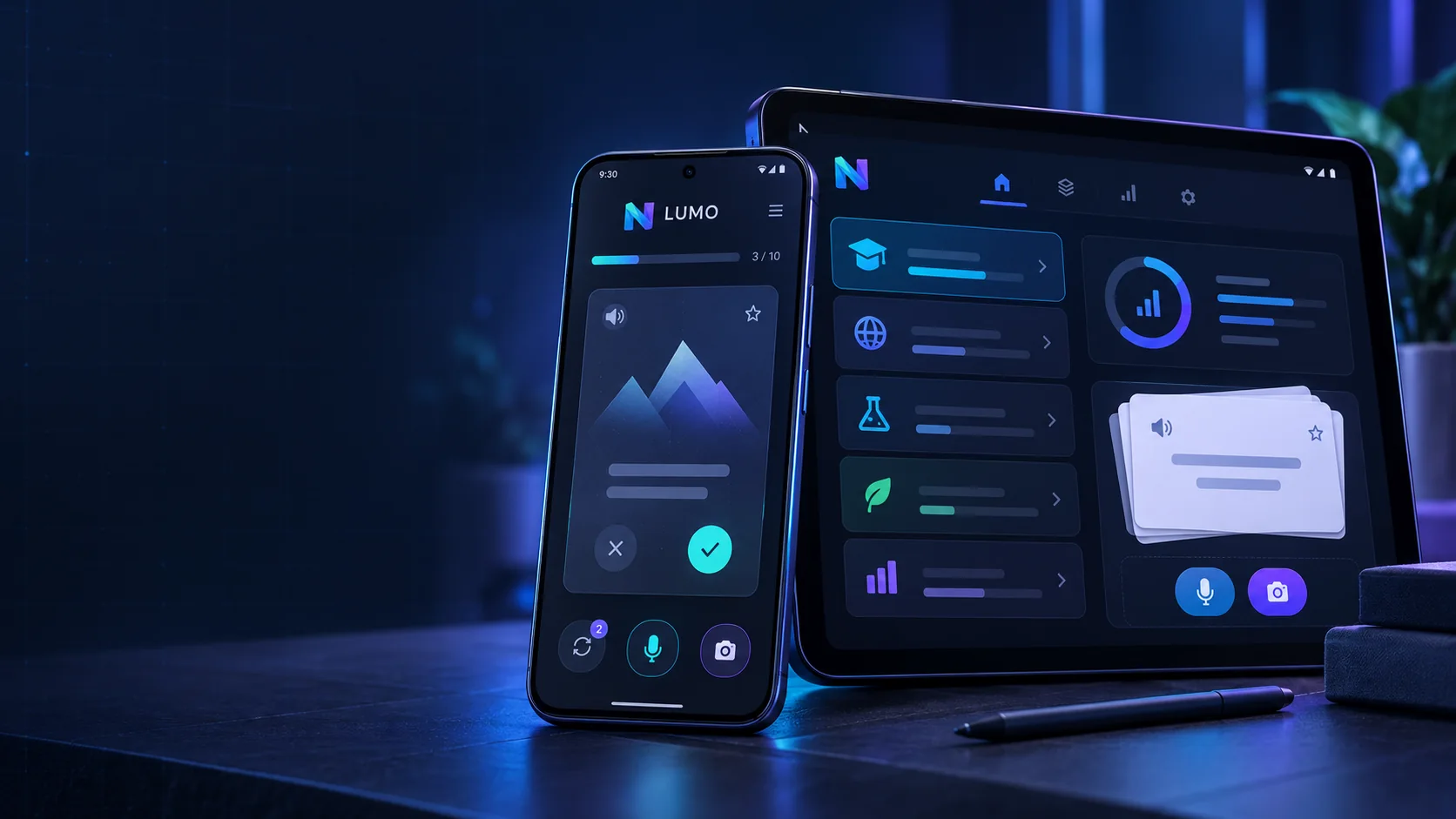
LUMO captures material by keyboard, image, scan, pen or voice and turns it into flashcards, exercises and targeted repetition.
What becomes easierLearners see what is secure, what needs practice and can exchange cards with friends.
Discuss this use caseFrom your material to the right practice
LUMO connects capture, practice and repetition in one app. It remains clear what came from you and what optional AI merely suggested.
Prepare cards by keyboard, image, document scan, pen or voice input.
Flip and swipe cards, write or speak answers, or work through a test.
Learning progress and card history show what is secure and what needs more practice.
Choose translation direction, listen to content and download language packages.
Connect friends by QR, exchange cards, comment, compare progress and send nudges.
NumenKI or MiniAI can suggest material and explain answers. Nothing is adopted without review.
Functional—and clearly qualified
The alpha already contains a substantial learning workflow. It is not yet a finished store product: device acceptance, optimisation and wider release are still in progress.
NumenKI or MiniAI can suggest learning material, prepare answers and offer explanations. It becomes learning content only after explicit acceptance. Core learning also works without AI.
Pronunciation checks currently compare recognised words, not phonetic quality. Handwriting corrections personalise recognition but do not train a separate handwriting model.
Current alpha status
Last confirmed on 5 October 2026 for Android phones and tablets. Device acceptance is ongoing; this does not represent a broad release or store publication.