Compare timelines
Cultures, regions and topics share the same time axis, revealing what happened in parallel.
Chrona · History in context
What happened at the same time—and how did events influence one another across regions?
Chrona connects timelines, historical maps, events and people in one comparative view of history. It reveals relationships that isolated dates cannot show.
Making history understandable
Books, search results and individual timelines usually tell only one part of the story. Chrona layers multiple perspectives and connects them to place—turning dates into historical context.
Cultures, regions and topics share the same time axis, revealing what happened in parallel.
Events, historical borders, trade routes and movements can be explored in their correct temporal context.
People, events and themes remain connected—from the first overview to deeper research.
One historical workspace
A selection on the timeline changes the view on the map. Filters, markers and saved views help investigate a question step by step without losing context.
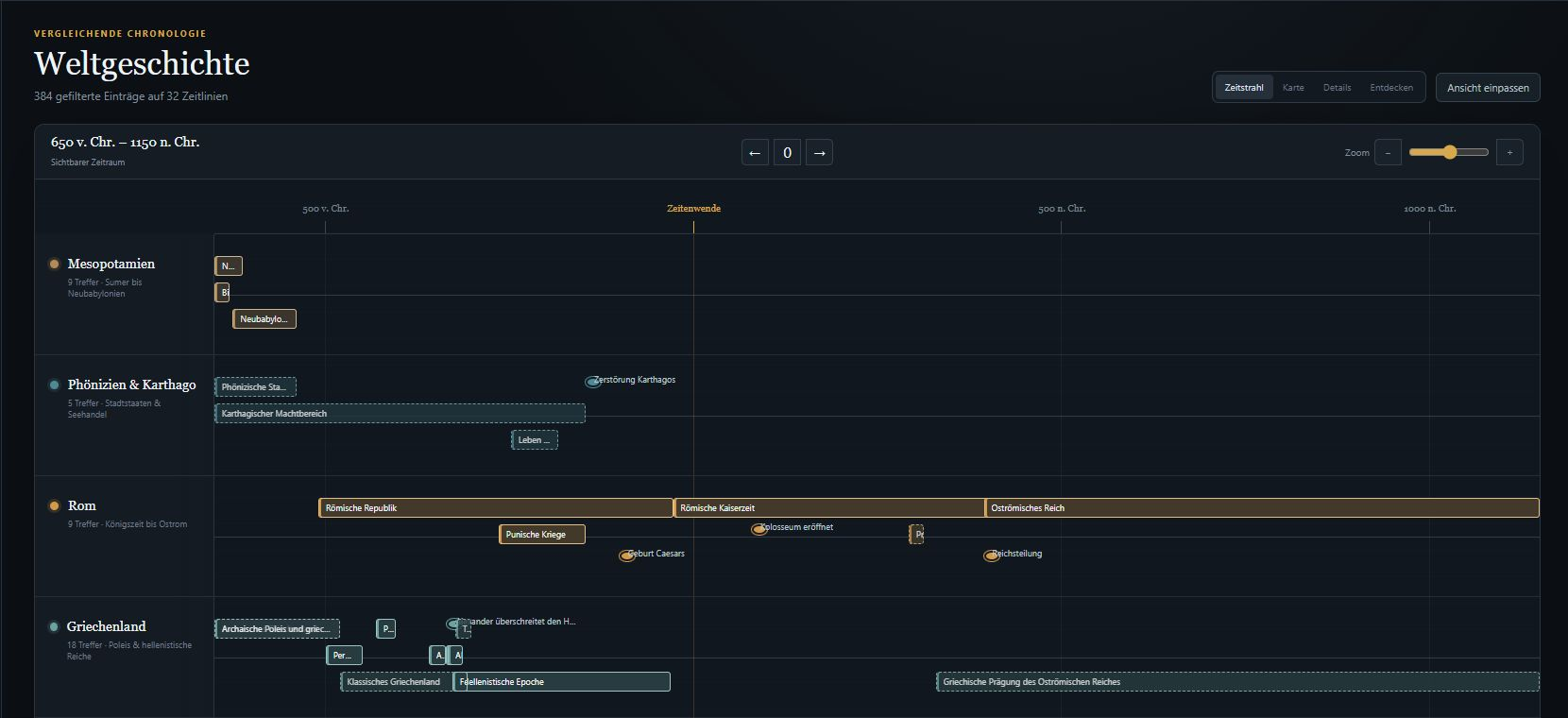
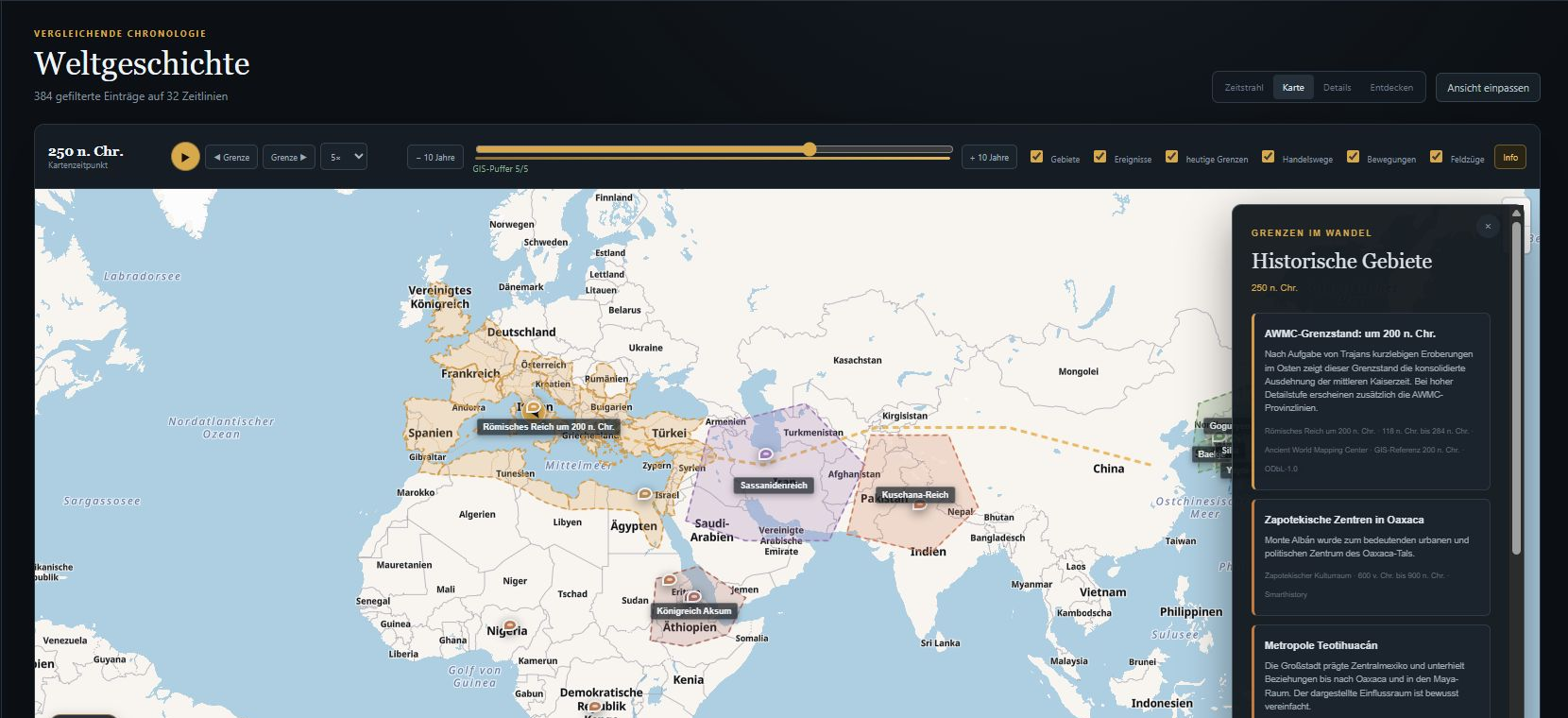
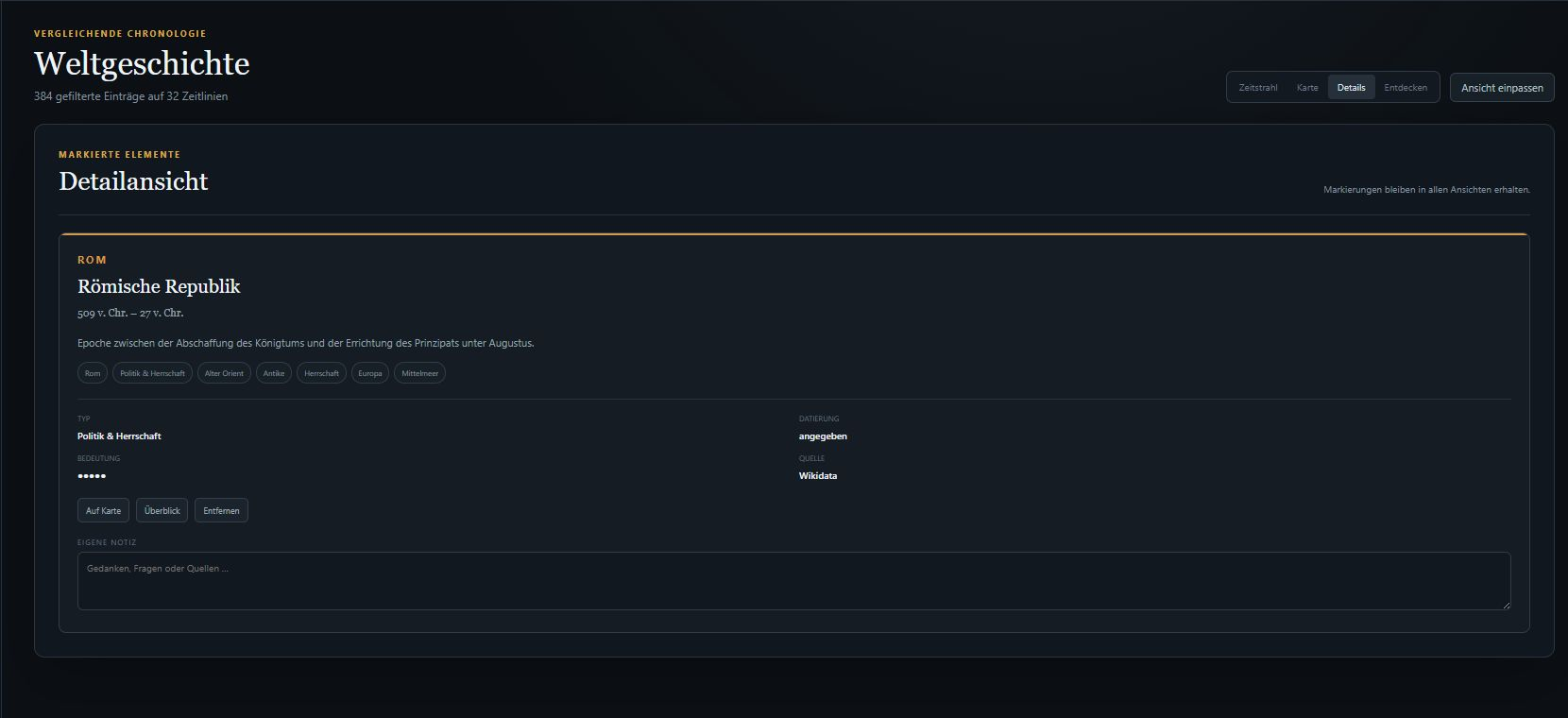
The same historical context—shown as a timeline, on the map or in detail, depending on the question.
For knowledge that stays in motion
Chrona is designed as an extensible platform—from a focused learning project to substantial historical datasets with custom timelines and map layers.
Explain history clearly without reducing it to a sequence of isolated dates.
Compare eras, regions and sources to develop coherent historical narratives.
Translate historical collections into interactive relationships across time and place.
The current demo already includes comparative timelines, map views, filters, markers and saved perspectives. Scope and historical data are being expanded step by step.